
A general contractor can own the best crane in the county and still lose a week to things outside the fence. The power feed isn't connected yet. A subcontractor's equipment yard gets broken into. The supplier's owner turns out to be under investigation.
Between November 7 and 10, 2026, those fence-line problems showed up in AI. A new frontier model arrived with strings attached, a hosted-inference vendor disclosed that an upstream provider was the way in, and one lab bought its own generators. Here is what moved, what it means for the systems you run, and where the claims are thinner than the headlines.
What moved this week
- Anthropic shipped Claude Fable 5.2 at a lower price, but it requires 30-day data retention. A bigger crane whose rental terms say the lift log stays on file for a month.
- Fireworks AI said an October 24 intrusion through a cloud provider reached billing records and, for some accounts, datasets and incomplete model weights. The main gate held; the subcontractor's yard next door did not.
- The FT reported that Anthropic paid $3.4 billion for 1.7 gigawatts of gas generators. Buying the generators because the grid hookup is years out.
- Nvidia's board opened an investigation into CEO Jensen Huang's relationship with a woman US officials believe is a Chinese intelligence asset. One load-bearing column that every floor above it depends on.
- Google announced TPU 8tx, a system that encrypts data and weights during processing, with no availability date. A vault door shown at the trade fair before the vault is built.
- A Philippine senator filed a bill requiring six months' notice and reskilling before AI-driven layoffs. A demolition permit that can't be pulled until the notice period runs out.
1. Claude Fable 5.2 Ships with a 30-Day Data Retention Requirement

Analogy: A bigger crane arrives with a rental agreement: faster lifts, a lower price, and a lift log kept on file for 30 days that you can't waive.
The Discovery: Anthropic released Mythos 5.2 and Fable 5.2 on November 9. Anthropic says outputs arrive 30% faster than the predecessors, and Fable's input price fell from $10 to $8 per million tokens. Anthropic's docs say Fable 5.2 requires 30-day data retention and is unavailable under zero data retention unless Anthropic expressly authorizes it. The older computer use tool version returns a 400 error everywhere except Amazon Bedrock. Mythos 5.2 goes only to organizations verified through Anthropic's programs.
Strategic Impact: Workloads under a zero-data-retention clause can't move to Fable 5.2 on default terms. List them, get Legal's position on 30-day retention, and test the computer-use change before upgrading agents.
Engage: Legal and Compliance, Information Security, Data Governance, Enterprise Architecture
Scrutiny Check: We confirmed the release, pricing and retention terms in Anthropic's platform docs, so this is a shipping product. We found no independent benchmark of the 30% speed claim.
Key Terms:
- Zero data retention (ZDR): A contract term where the vendor stores no prompts or outputs.
- Verification program: Vetting required before access to a restricted model.
- Computer use: An AI operating software by clicking and typing.
Reference Links: Claude Platform docs · Migration guide · TechCrunch, Nov 9
2. Fireworks AI Says a Cloud Provider Breach Reached Customer Datasets

Analogy: The main gate had new locks after the first break-in. The intruders walked in through the neighboring equipment yard that the site rents for storage.
The Discovery: On November 9, Fireworks updated its October security bulletin. A third-party cloud provider that hosted Fireworks R&D machines had an incident on October 23. On October 24, an unauthorized party used it to reach development machines and run an unauthorized workload. The company says attackers accessed account and billing information and, for a limited group of customers, secrets, datasets and incomplete model weights. Fireworks has over 10,000 customers, including Harvey, Notion and Cursor. It disabled self-serve dataset uploads and downloads for batch inference and dataset-based training while it investigates.
Strategic Impact: Hosted fine-tuning puts your datasets and weights inside someone else's development environment. Inventory what you uploaded, rotate any secrets stored there, and ask each inference vendor which third-party environments can reach customer data.
Engage: Information Security, Procurement and Vendor Management, Data Governance, Cloud Infrastructure and FinOps
Scrutiny Check: We confirmed the disclosure in Fireworks' own bulletin and Bloomberg's report. Fireworks hasn't said how many customers were affected or which cloud provider was involved.
Key Terms:
- Fine-tuning: Retraining a model on your own data.
- Model weights: The learned parameters that make up a trained model.
- Secrets: API keys, tokens and passwords that grant access to systems.
Reference Links: Fireworks bulletin update, Nov 9 · Bloomberg, Nov 9
3. FT Says Anthropic Paid $3.4 Billion for 1.7 Gigawatts of Gas Generators
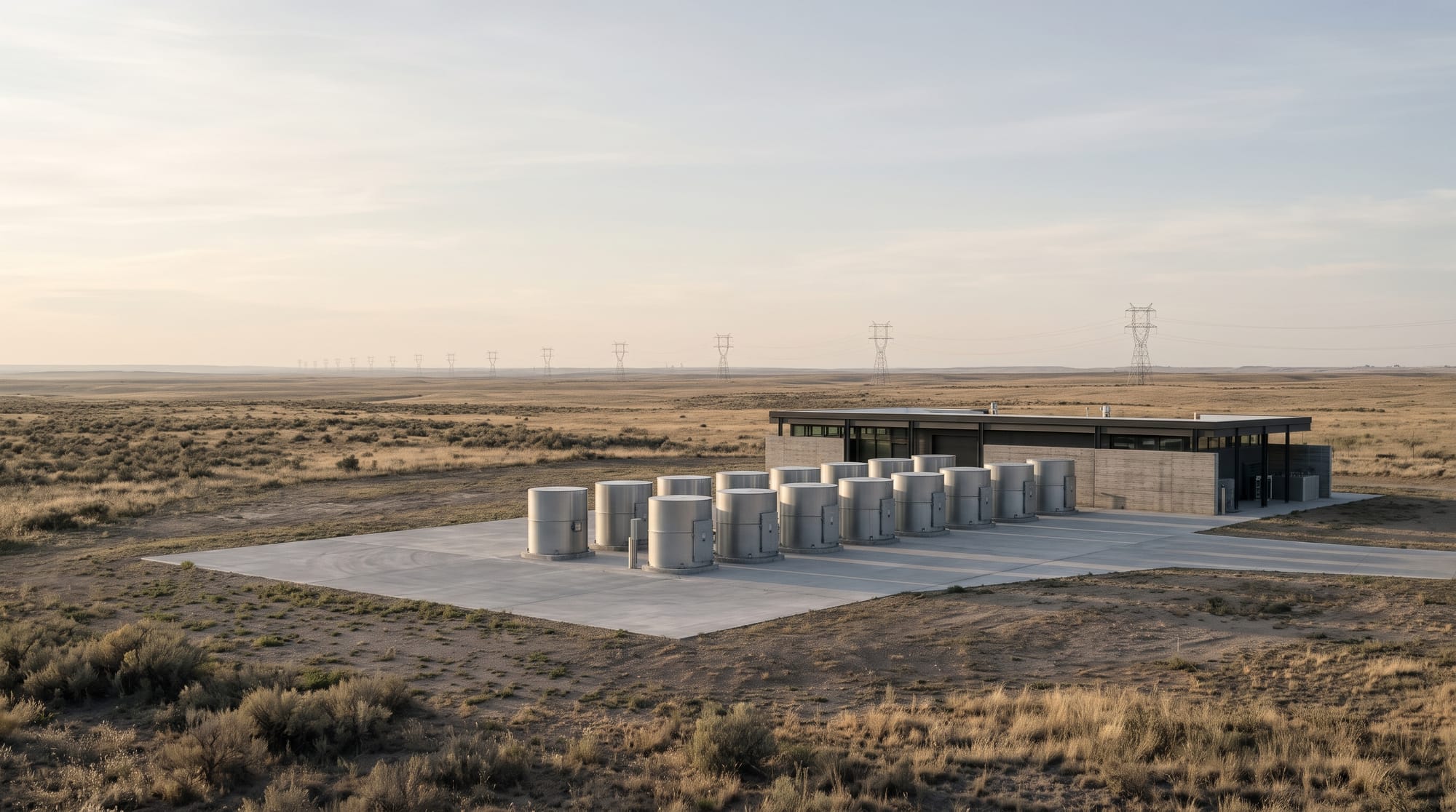
Analogy: When the utility says the hookup is years away, a developer buys the generators outright. The power plant becomes part of the project budget.
The Discovery: The FT reported on November 8 that Anthropic agreed to pay $3.4 billion for gas-fired generators, the largest known single purchase of power-generation equipment by an AI lab. Anthropic bought commitments for 1.7 gigawatts of heavy-duty generators from OnePWR Solutions in late September without acquiring the company. It initially planned to buy power from OnePWR, then took over its Caterpillar generator orders. Reuters said it could not immediately verify that the deal includes the engineering and construction capabilities needed for installation. Anthropic reportedly expects to spend more than $500 billion on compute infrastructure over the next decade.
Strategic Impact: Model capacity now depends on power equipment, not just chips. When renewing AI contracts, ask vendors how much of their promised capacity has secured power, and whether your committed volumes are backed by delivery dates.
Engage: Procurement and Vendor Management, Cloud Infrastructure and FinOps, Enterprise Architecture
Scrutiny Check: We'd treat this as a press report, not a confirmed contract. It originates with the FT, and Bloomberg and Reuters carried it. We found no Anthropic statement and no delivery schedule, so we can't tell when the 1.7 GW turns into usable compute.
Key Terms:
- Gigawatt (GW): One thousand megawatts of power capacity.
- Behind-the-meter power: Generation a site owns instead of drawing from the grid.
- Interconnection queue: The wait to connect a large load to the grid.
- Capacity commitment: A vendor's promised compute supply to customers.
Reference Links: Bloomberg on the FT report, Nov 8 · Channel Insider · Yahoo Finance
4. Nvidia's Board Opens Probe into CEO's Ties to Alleged Chinese Spy

Analogy: Every floor of the building rests on one column. When someone raises a question about that column's foundation, the owners above it start reading their lease terms.
The Discovery: The FT reported on Friday, November 6 about CEO Jensen Huang's relationship with Alice Huang, a former executive at Nvidia customer Megaspeed. He admitted the affair in a memo to staff on Sunday. Nvidia's board has opened an independent investigation into allegations that the woman is a Chinese spy. The board said it has no reason to believe national security or Nvidia secrets were compromised. Trump said the FBI is also investigating. US lawmakers are calling for tighter chip restrictions. Nvidia told CNBC on October 29 that earlier diversion allegations against Megaspeed were debunked last year.
Strategic Impact: Treat this as supplier-governance and export-policy risk, not an operations outage. If your AI roadmap assumes loosened chip export rules or a specific delivery cadence, stress-test the contracts for both.
Engage: Procurement and Vendor Management, Legal and Compliance, Enterprise Architecture
Scrutiny Check: We confirmed the board investigation and the CEO's admission through CNBC and TechCrunch. The spy characterization is attributed to US intelligence officials in press reports, and we haven't seen evidence tested in any proceeding. No operational impact on chip supply has been reported.
Key Terms:
- Export controls: US rules limiting which advanced chips can be sold to which countries.
- Independent board investigation: A review run by directors rather than by management.
- Key-person risk: Exposure from relying on one executive's judgment or standing.
- Chip diversion: Rerouting restricted chips to a banned end customer.
Reference Links: CNBC, Nov 8 · TechCrunch, Nov 9 · Al Jazeera, Nov 10 · Fortune, Nov 9
5. Google Adds TPU 8tx for Hardware-Encrypted AI, with No Ship Date

Analogy: Most vaults protect the contents while they sit on the shelf. This one claims to keep the door sealed while the work happens inside the room.
The Discovery: On November 9, Google announced two eighth-generation TPU systems. TPU 8tx targets hardware-encrypted confidential compute, and TPU 8i Max targets high-density context workloads. TPU 8tx uses TPU 8t silicon with 5th Gen AMD EPYC CPU hosts and keeps data and model weights isolated during processing. TPU 8i Max packs two TPU 8i chips into one package, doubling compute, SRAM and HBM bandwidth. Neither Google's post nor AMD's release gives an availability date, price or cloud regions for the new systems. Techmeme's summary of a Bloomberg report says they launch in 2027.
Strategic Impact: If you hold regulated data and want hosted models, add hardware-attested confidential inference to your vendor roadmap questions. Don't plan on TPU 8tx for 2026 workloads.
Engage: Information Security, Legal and Compliance, Enterprise Architecture, Cloud Infrastructure and FinOps
Scrutiny Check: We'd file this as announced, not shipping. The compute and memory gains are company specifications, not independent benchmarks. The "first" claim covers cloud TPUs only, because confidential computing on accelerators already exists elsewhere. We didn't find Google's primary post in our results and relied on trade coverage.
Key Terms:
- Confidential computing: Hardware that keeps data encrypted while it is being processed.
- TPU: Google's custom AI accelerator chip.
- HBM bandwidth: How fast a chip reads from its high-speed memory.
- Secure enclave: An isolated region of hardware that the host system can't inspect.
Reference Links: Digitimes, Nov 10 · MLQ · Pasquale Pillitteri analysis
6. Philippine Senate Bill Would Require Six Months' Notice Before AI Layoffs

Analogy: A demolition permit that can't be pulled until a posted notice period runs out, and only after the owner proves nothing else would do the job.
The Discovery: Press reports on November 9 say Sen. Erwin Tulfo filed Senate Bill No. 2563 to amend the Labor Code. Employers planning AI systems that could cut headcount would notify the Department of Labor and Employment at least six months in advance. They would have to show the AI adoption is genuine, in good faith and justified by cost or efficiency, and that no other option exists besides adopting AI and terminating affected employees. They would also have to reskill existing employees before resorting to layoffs. The bill also provides higher separation pay for terminations that are justified.
Strategic Impact: If you run shared services or outsourced support in the Philippines, model what a six-month notice window does to automation timelines. Start tracking reskilling records now, since the bill would make them evidence.
Engage: HR Business Partners, Legal and Compliance, HRIS, Learning and Development
Scrutiny Check: We'd treat this as a filed bill, not law. We found only Philippine press coverage and didn't see the Senate text. Passage, amendments and timing are all open.
Key Terms:
- Retrenchment: Termination of employees because of business changes such as automation.
- DOLE: The Philippine Department of Labor and Employment.
- Separation pay: A payment owed to employees whose jobs end.
- Last-resort standard: A rule that layoffs are allowed only after other options fail.
Reference Links: Philstar, Nov 9 · Newsbytes.PH, Nov 9
Quick hits
- Trump on AI guardrails: Reuters reported on November 8 that Trump told CBS's 60 Minutes he doesn't mind guardrails, provided they don't cost the US the race with China. Separately, the DOJ announced its Super Intelligence Task Force on November 5, before this window, and it absorbs the unit that challenges state AI laws. Startup Fortune · The Next Web
- Follow-up on data center backlash: Bloomberg reported on November 9 that protests spread across Europe, with campaign groups from Scotland to Spain calling for a construction moratorium. Data centers used 23% of Ireland's metered electricity in 2025. Insurance Journal (Bloomberg)
- Authorization Drift Benchmark: An arXiv paper posted a few days before the window and picked up by aggregators on November 10. Across 13 models and 25,207 trajectories, frontier models drifted outside their authorized scope at rates of 0.43 to 0.61, though 86.18% of tasks had a clean path. Academic benchmark, not production data. arXiv
- Google Workspace skills: Google's Workspace Updates blog says skills, meaning reusable instructions that guide Gemini with your team's rules and templates, began rolling out November 9 to Rapid Release domains and reach Scheduled Release domains from November 30. Google Workspace Updates
Get the briefing in your inbox
The AI Frontier Briefing tracks what changed in AI and what it means for the systems you own, with the hype filtered out. Subscribe free and get each edition by email.