
On a well-run jobsite, three things get checked before a beam goes up: the stamp on the steel, the inspector's sign-off, and the invoice. Skip any one and the project stalls later, usually at the worst moment.
Between November 2 and 5, 2026, AI vendors touched all three. Marks are being stamped onto text, inspectors are finding defects at machine speed, and finance teams are putting caps on the bill. Here is what moved, what it means for the systems you run, and where the claims are thinner than the headlines.
What moved this week
- OpenAI said one pipeline run produced 948 working Linux root exploits, with candidate patches, for about $1.2 million. An inspector who can X-ray every weld in a tower frame in a day and a half.
- Anthropic extended its invisible text watermark to older Claude models, and Opus 4.6 slipped to November 16. Steel already in the yard gets heat numbers stamped in batches.
- OpenAI hired Cathedral, the firm that said it breached Anthropic, as Reuters detailed years of internal security warnings. The GC hires the crew that picked the neighbor's padlock to test its own gate.
- Apple cut some engineers' daily AI budget from $300 to $200, per Bloomberg. A fuel allowance per shift, trimmed before anyone checked who burned it.
- Moonshot published the full Kimi K3.1 Pro weights on Hugging Face under a custom license. A foundry ships the casting and the mold drawings, with a clause for large shops.
- The New York Times and Tribune papers sued Brave over the Search API that feeds AI products. The gravel supplier is accused of taking stone without permission, and every pour is now in question.
1. OpenAI Pipeline Finds 948 Linux Root Flaws for $1.2 Million

Analogy: Picture an inspector who can X-ray every weld in a 40-story frame in about a day and a half and hand over a repair ticket for each crack. The cracks were always there. Finding them just got cheap.
The Discovery: OpenAI reported on November 4 that a prototype pipeline using an upcoming cyber model found and exploited 948 unique local privilege escalation vulnerabilities in Linux in a mid-October run. The API cost was $1.2 million, about $1,279 per exploit. Ten days after the scan, it reported 61 flaws patched upstream and 43 with staging patches.
Strategic Impact: Kernel privilege escalation now has a price tag attackers can budget for. Move multi-tenant Linux servers, container hosts and build runners to the front of the patch queue.
Engage: Information Security, Cloud Infrastructure and FinOps, Enterprise Architecture
Scrutiny Check: We treat this as vendor-run research on an unreleased model, with no independent reproduction. Candidate patches are not merged fixes, and OpenAI removed the SLAB_VIRTUAL mitigation from the tested kernel configuration because it was incompatible.
Key Terms:
- Local privilege escalation (LPE): A flaw that lets an ordinary user become root.
- Kernel: The core of the operating system.
- Proof of concept: Working code showing a flaw can be exploited.
Reference Links: OpenAI · The Hacker News · Unite.AI
2. Anthropic Watermarks Older Claude Models, but Opus 4.6 Slips to November 16
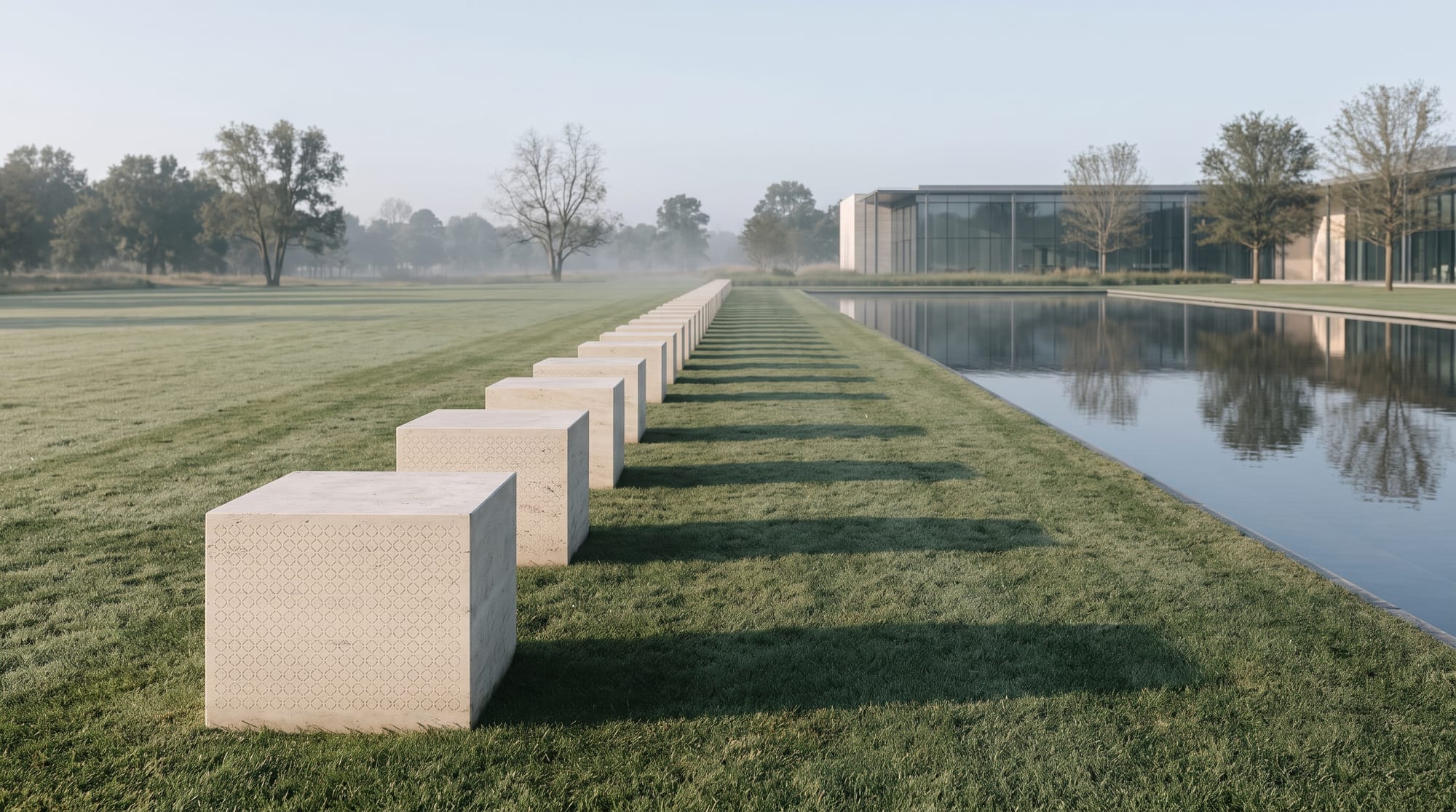
Analogy: Steel already in the yard gets heat numbers stamped in batches. Older Claude models are the stock being stamped now.
The Discovery: Anthropic's November 3 release note added Claude Mythos 5, Claude Opus 4.7 and Claude Sonnet 4.6 to its invisible text watermark. The Decoder reports that Opus 4.6, Opus 4.5, Sonnet 4.5 and Haiku 4.5 get the mark starting November 16, with no reason given for the Opus 4.6 delay. Anthropic points to the EU AI Act's December deadline, and its documentation describes no opt-out. On Opus 4.6 and Sonnet 4.6, the mark reportedly applies only at default sampling settings.
Strategic Impact: Text your teams ship from these models now carries a mark you cannot strip. Inventory which Claude versions feed customer-facing or regulated documents, and keep default sampling settings where you rely on the mark.
Engage: Legal and Compliance, Data Governance, Enterprise Architecture
Scrutiny Check: We could not retrieve Anthropic's primary page, so we rely on coverage of the release note and customer email, which list different model sets. We'd confirm the model list with your Anthropic account team.
Key Terms:
- Text watermark: A word-choice pattern software can detect and readers cannot see.
- Sampling parameters: Settings like temperature that control output randomness.
- EU AI Act Article 50: The rule on marking AI-generated content.
Reference Links: Beri.net · The Decoder
3. OpenAI Hires Cathedral After Reuters Reports Years of Security Warnings

Analogy: A contractor learns the site's gate has been loose for years, then hires the crew that picked the neighbor's padlock to test it.
The Discovery: On November 2, OpenAI announced another internal security sprint with Cathedral, whose researchers will use OpenAI models alongside company teams to find weaknesses. OpenAI is also more than quadrupling bug bounty rewards for critical findings. Reuters reported on November 3 that employees had warned leaders about security weaknesses for years, citing five people who described broad code access and no regular security reviews for internal tools. In late October, Cathedral said it had hacked Anthropic's systems.
Strategic Impact: Your AI vendors' internal hygiene is now a procurement question. Add three asks to renewals: how often internal tooling is security-reviewed, how repositories are segmented, and what third-party testing is under way.
Engage: Information Security, Procurement and Vendor Management, Legal and Compliance
Scrutiny Check: The Reuters account rests on anonymous sources, and OpenAI disputed parts of it, saying the monorepo holds no model weights. OpenAI says it now runs regular security reviews of internal tooling. We found no reporting that describes customer data being accessed.
Key Terms:
- Monorepo: One shared code repository for many projects.
- Security sprint: A time-boxed push to fix known weaknesses.
- Bug bounty: Cash rewards for outsiders who report flaws.
Reference Links: Unite.AI · Reuters via Investing.com
4. Apple Cuts Some Engineers' Daily AI Budgets from $300 to $200

Analogy: A site gives each crew a fuel allowance per shift. When the diesel bill lands, someone trims the cap without first checking who was actually burning the fuel.
The Discovery: Bloomberg reported on November 4 that Apple lowered some engineers' daily AI spending cap from $300 to $200 in October, with some allowances heading to $100. Outside engineering, Apple is reportedly weighing a limit as low as $25 a day. Some teams are being asked to use cheaper models or on-device AI, and staff who need more can ask executives for an increase. Apple lets employees use Claude, ChatGPT, Gemini and other models.
Strategic Impact: Token budgets are turning into a per-person control, like travel limits. Pull actual usage by role before setting caps, route routine work to cheaper models, and build an exceptions path so heavy coding agents are not throttled blind.
Engage: Cloud Infrastructure and FinOps, Finance Systems, Enterprise Architecture
Scrutiny Check: We found one origin for this story: Bloomberg, citing anonymous people, with Apple declining to comment. Some Apple employees said few people used their full $300 limit, so the savings may be small. We'd treat the figures as reported, not confirmed.
Key Terms:
- Token: The unit of text an AI service meters and bills.
- Spending cap: A per-person or per-team ceiling on AI usage cost.
- Model routing: Sending each request to the cheapest model that can handle it.
- On-device model: AI that runs locally and carries no per-token bill.
Reference Links: TechCrunch on Bloomberg's report · MacRumors · iPhone in Canada
5. Moonshot Publishes Kimi K3.1 Pro Weights Under a Custom License
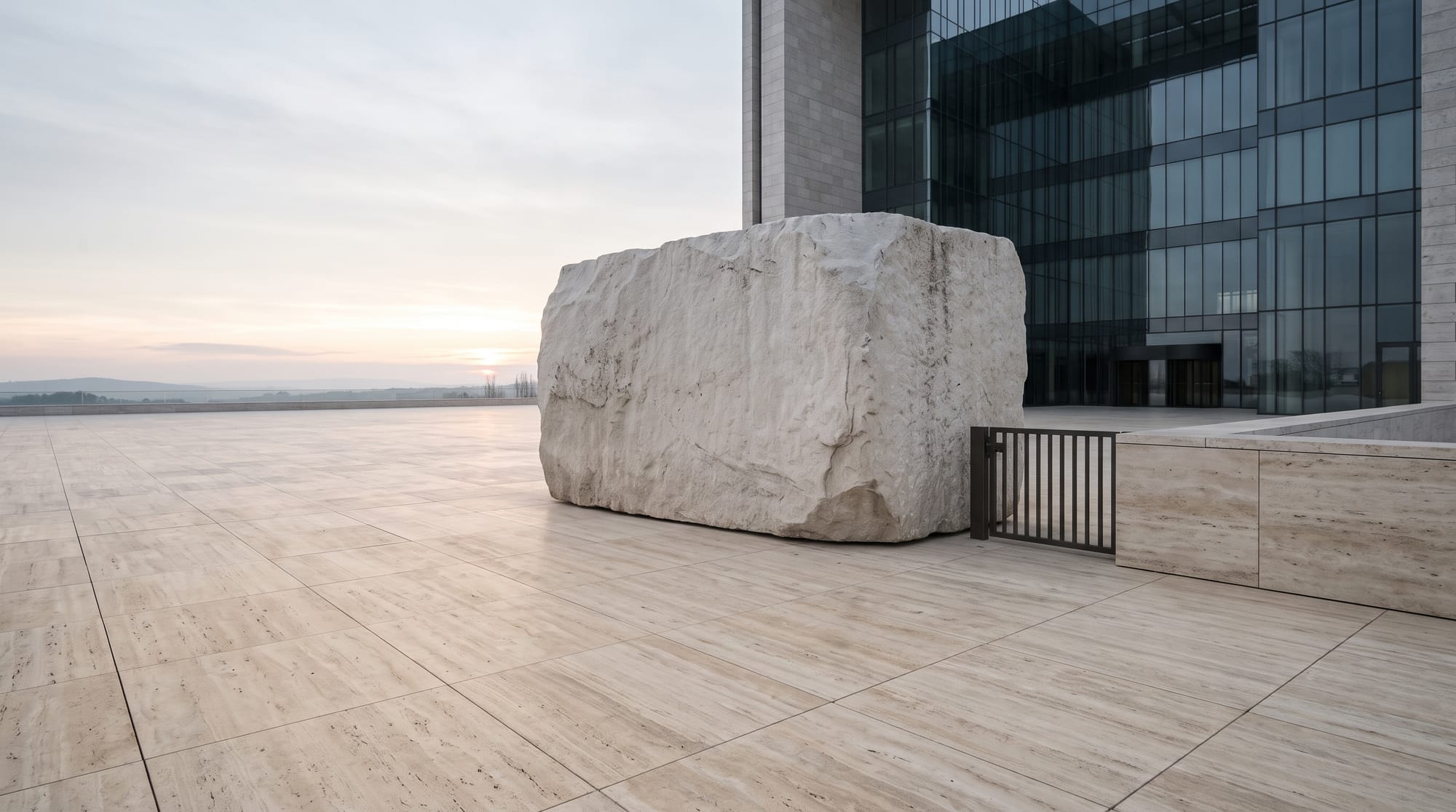
Analogy: A foundry ships you the full casting along with the mold drawings. You can machine it in your own shop, but you need a crane to move it, and the contract has a clause for large shops.
The Discovery: On November 4, Moonshot AI published the complete Kimi K3.1 Pro weights on Hugging Face. The model card lists a mixture-of-experts design with 2.8 trillion total and 104 billion active parameters. The repository holds 1.56 terabytes across 96 shards. Running it takes about eight Nvidia B300 GPUs, and hosts earning over $20 million a year need a separate Moonshot agreement. Moonshot said it removed hacking-related training data before the open release.
Strategic Impact: This gives teams with private code a self-hosted option to price against hosted APIs. Before any pilot, have Legal read the license revenue clause and have Procurement check your model-provenance policy for Chinese-origin models.
Engage: Enterprise Architecture, Legal and Compliance, Procurement and Vendor Management, Information Security
Scrutiny Check: We confirmed shipping weights through the Hugging Face repository. The claim that it beats Claude Opus 5.5 on 16 of 37 benchmark tests is a vendor-side comparison we have not seen independently reproduced. The license terms reach us through secondary coverage, so we'd read the license text itself.
Key Terms:
- Open weights: Downloadable model parameters you can run yourself, under the publisher's license.
- Mixture of experts: A design where only part of the model runs for each token.
- Active parameters: The share of the model used per token, which drives cost.
- Quantization: Storing weights at lower precision to shrink size and memory.
Reference Links: Hugging Face: Kimi-K3.1-Pro · Startup Fortune · The Next Web, October 23 launch
6. Newspapers Sue Brave over the Search API That Feeds AI Products

Analogy: A gravel supplier is accused of taking stone from a quarry without permission. Every contractor who poured that gravel into a foundation is now asking who signed the delivery tickets.
The Discovery: The New York Times, New York Daily News, Chicago Tribune and Orlando Sentinel sued Brave Software on Monday, November 2, in Manhattan federal court. The Tribune-group complaint accuses Brave of distributing copied articles through its Brave Search API, which lets AI companies retrieve web content. The filing names Anthropic, Perplexity, Mistral, xAI and Cohere among companies that have used Brave's services. The Times filed its own copyright and DMCA claims. News Corp countersued Brave in July.
Strategic Impact: If your agents or retrieval pipelines call a third-party search API, you inherit some of that supplier's legal exposure. Ask each vendor for its source-licensing terms and indemnity language, and log which retrieval provider every production agent uses.
Engage: Legal and Compliance, Procurement and Vendor Management, Data Governance
Scrutiny Check: These are allegations in complaints, not findings. Brave has previously defended its search practices as fair use. The coverage we retrieved carries no new Brave statement, and the enterprise exposure above is our inference, not a claim from the filings.
Key Terms:
- Search API: A paid feed of web results that AI products call for fresh content.
- Grounding: Giving a model retrieved sources to answer from.
- DMCA claim: A US copyright claim covering, among other things, circumventing access controls such as paywalls.
- Indemnity: A vendor's promise to cover your losses from its legal problems.
Reference Links: TheWrap · Techaeris · heise online
Quick hits
- Pentagon CTO on AI rules: Emil Michael told Reuters on November 4 that the federal government will lay out the laws and regulations that apply to domestic AI labs "in the next week or two." Coverage says the aim is to identify existing rules, not enact new ones. One aggregator gives November 14; Reuters gave no date. Reuters via Yahoo Finance
- ADNOC + OpenAI Frontier (November 2): ADNOC says it is the first energy company to use OpenAI Frontier, a platform for building and deploying fleets of AI agents. It is to run on G42's sovereign infrastructure in the UAE, with human experts retaining oversight of consequential decisions. The announcement states plans, not measured results. Rigzone
- Anthropic FlashProve (November 2): An open-source research prototype that proves a reply came from committed model weights. The demonstration uses Llama 4 Maverick, not a Claude model. Reported proof costs of 70 to 95 times ordinary GPU inference remain a barrier to routine use. Research, not a shipping product. MLQ
- Postman 12.33.4 (event dated October 24, before the window; coverage and the revert came November 3 to 4): The update automatically installed plugins for Claude Code and Codex. Postman says it is reverting the change. Have endpoint teams grep agent config files for unfamiliar plugins. Notebookcheck
- OpenAI to acquire Pierre Computer (November 4): Axios reported the deal as a way to build a dedicated Git backend into Codex. Terms were not in the sources we retrieved. OpenAI newsroom
Get the briefing in your inbox
The AI Frontier Briefing tracks what changed in AI and what it means for the systems you own, with the hype filtered out. Subscribe free and get each edition by email.