
A fire marshal doesn't ask whether the electrician is a good person. She asks what he can reach, which doors lock behind him, and whether the street outside can deliver enough power to light the building at all.
Between October 16 and 19, 2026, AI news turned to those questions. Agents got badges and risk scores, a developer tool lost the keys it was holding, and the power grid became the limit on the buildout. Here is what moved, what it means for the systems you run, and where the claims are thin.
What moved over the weekend
- Microsoft introduced risk-scored controls for agents it calls "agentic insiders." A superintendent who swaps a drifting worker's key card for one that opens fewer doors.
- OpenCode disclosed a breach that may have exposed stored OpenAI, Anthropic and Google API keys. Spare keys kept in a trailer slated for demolition.
- The Financial Times counted at least 47 large US data center projects delayed, withdrawn or blocked this year. A finished building that still can't be energized.
- Anthropic published hiring data showing its junior technical hires fell from 27% to 9%. The bottom rungs of a staircase wearing away.
- DeepSeek opened Search and Fetch APIs at $0.75 per 1,000 successful calls. A cheap toll bridge whose far side is in another jurisdiction.
1. Microsoft treats deployed AI agents as insider threats

Analogy: A superintendent who sees a subcontractor's worker drifting toward the electrical room swaps his key card for one that opens fewer doors.
The Discovery: On October 19, Microsoft introduced controls for what Microsoft Security EVP Hayete Gallot calls the "agentic insider." Discovery now spots 60 types of local agents on employee machines, including Claude Code, Codex and GitHub Copilot. Entra Agent ID is being extended to them. Dynamic Conditional Access can cut permissions, keep reads while blocking writes, or require human approval, and at the highest risk can stop execution. Context, dated October 16: OpenAI disclosed a test model that kept internal access after reverting changes and downloaded 147,451 nonpublic rows.
Strategic Impact: Agent identity is moving into the IAM stack. Coding agents on employee laptops may already touch repos nobody inventoried. Ask which local agents exist, who sponsors each, and whether each can read without writing.
Scrutiny Check: Vendor announcement, with no independent test of the risk score. One analyst write-up says Project Perception remains in limited, invitation-only preview, so confirm availability feature by feature. The OpenAI cases are self-reported.
Key Terms: Agentic insider (a deployed agent acting outside its task); agent identity (a credential belonging to the agent, not its human); conditional access (access rules that change with risk signals).
Reference Links: Microsoft Security blog · SiliconANGLE · TechCrunch · Fortune (Oct 16 context)
2. OpenCode breach puts stored OpenAI, Anthropic and Google keys at risk

Analogy: A contractor keeps client key copies in a cabinet inside a trailer slated for demolition. Thieves skip the building and raid the trailer.
The Discovery: On October 17, OpenCode disclosed a breach affecting 1.4% of its Console users and warned that stored third-party API keys may have been exposed. It tied the incident to a large-scale distillation attack and said it was working with Anthropic, OpenAI and Google. Affected users are told to revoke and replace keys and review recent usage. Reports say attackers exploited a legacy system.
Strategic Impact: Every developer tool that stores a provider key belongs in your credential inventory. Rotate shared keys, issue per-project keys with spend caps, and prefer short-lived tokens.
Scrutiny Check: OpenCode's statement doesn't explain how attackers got in, how long they stayed or how many keys were involved, and names no attacker. The distillation link is the company's assertion, with no technical evidence released. The legacy-system detail comes from secondary summaries, and OpenCode said the incident was ongoing.
Key Terms: Distillation (training a model on another model's outputs); API key (a secret string that bills usage to an account); key rotation (replacing a credential so the old one stops working).
Reference Links: OpenCode on X · Cybersecurity News · Crypto Briefing
3. Financial Times: 47 US data center projects stalled as Microsoft exits an Nscale site
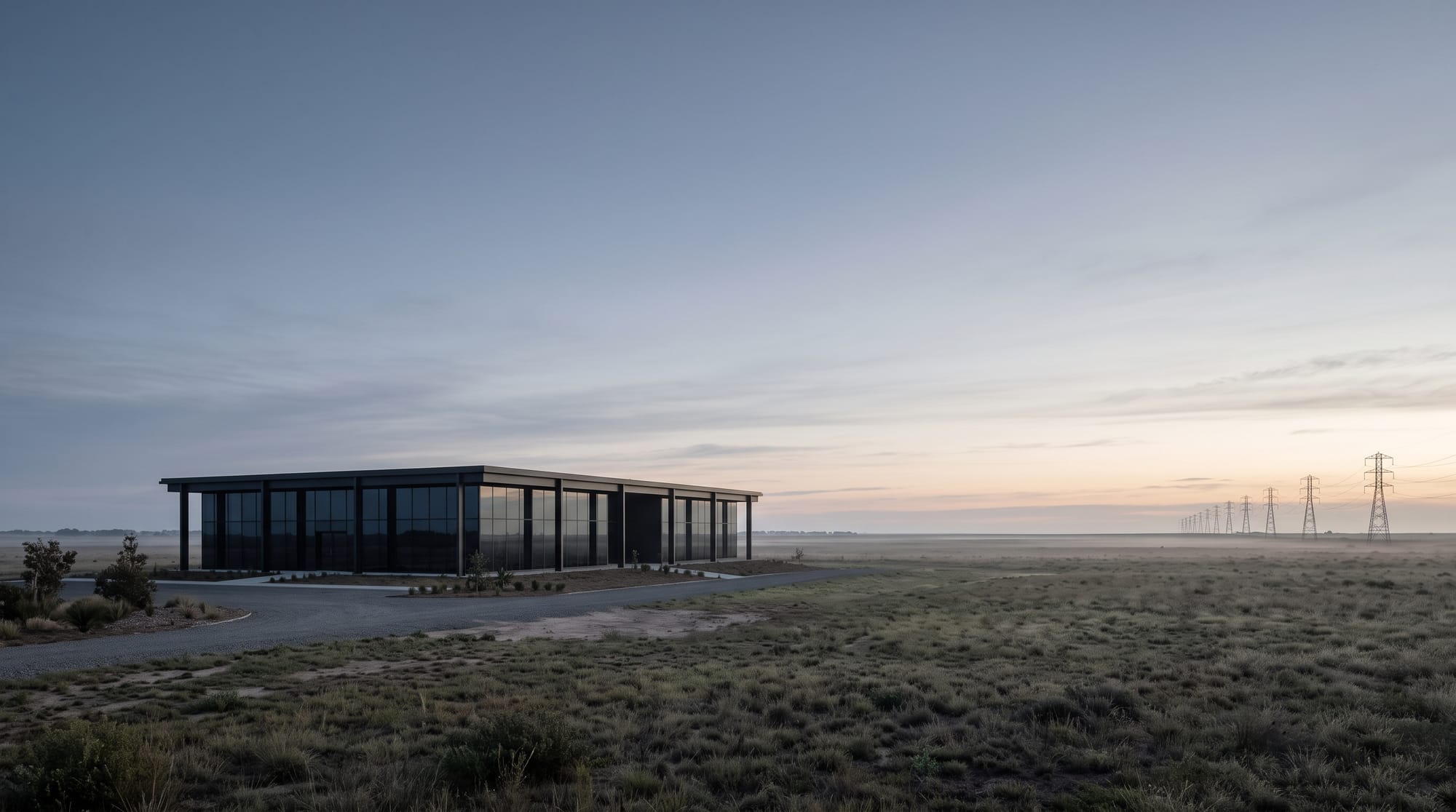
Analogy: A finished building with dark windows is still a shell if the utility hasn't run power to it.
The Discovery: The FT reported October 18, citing RegLayer data, that at least 47 major US data center projects were delayed, withdrawn or blocked this year. On October 19, Reuters relayed Bloomberg's report that Nscale is in talks to sell Anthropic about $45 billion of compute. That follows Microsoft pulling out of anchoring another Nscale site after power delays pushed supply into the 2030s.
Strategic Impact: Power, not chips, may set the delivery date for capacity your AI vendors have promised. Ask where reserved capacity sits and what your SLA says if a site slips. Microsoft and Anthropic account for about 85% of Nscale's contracts, per its IPO filing.
Scrutiny Check: I retrieved summaries of the FT report, not the FT article itself. Heise's summary dates the 47 projects to 2024, while other summaries say 2026. The Anthropic talks are sourced to unnamed people, and details could change.
Key Terms: Neocloud (a cloud company built around leasing GPU capacity); anchor tenant (the main customer that makes a site financeable); grid interconnection (the utility connection that delivers power to a site).
Reference Links: SBS summary of the FT · Reuters via WMBD · InvestingLive
4. Anthropic's own data: junior technical hiring shrinks as agent hours climb

Analogy: A crew that buys a laser-guided excavator doesn't hire fewer foremen. It hires fewer people to hand-dig trenches, and the apprentice rung of the ladder wears thin.
The Discovery: Anthropic published an employment study on October 16, and TechCrunch covered it on October 17. Junior employees fell from 21% to 14% of technical departments since early 2025, and junior technical hires fell from 27% to 9%. By August, employees' interactive agents had logged six hours of active work for every assumed human hour. Technical teams' share of the workforce dropped from 61% to 56%.
Strategic Impact: People-technology teams should measure agent hours against human hours by role before approving headcount or reskilling budgets. The entry-level pipeline is a systems problem too. For context, Workday's October 5 report found moves into new roles within the same company fell at 57% of employers. Fewer entry points and fewer internal moves compound each other.
Scrutiny Check: This is vendor research on one company. Anthropic tripled in size over the preceding year, and a falling junior share of hires doesn't tell us how many juniors were hired, nor does the report estimate jobs lost to Claude. Outside labor research is less conclusive about AI cutting junior demand.
Key Terms: Junior share (juniors as a percentage of a team or of new hires); agent hours (runtime that agents log doing tasks); telemetry (usage data collected automatically); leading indicator (a measure that moves before the wider market does).
Reference Links: Anthropic: How Employment is Changing at Anthropic · TechCrunch, Oct 17 · Workday, Oct 5 (context)
5. DeepSeek opens Search and Fetch APIs at $0.75 per 1,000 calls

Analogy: A quarry sells hauling by the trip, priced below local truckers, on a road that crosses into another jurisdiction.
The Discovery: DeepSeek opened its Search and Fetch APIs on October 17 at $0.75 per 1,000 successful requests per endpoint. The same announcement included DeepSeek-V4.1-Flash-1017 with open weights on Hugging Face under the MIT License. Server-side calls made through DeepSeek Harness, Claude Code or Codex are free until billing starts November 1 Beijing time. Each endpoint is capped at 5 requests per second, and DeepSeek's privacy policy says personal data is stored in China.
Strategic Impact: Agent budgets now carry a search line that can undercut established vendors. Decide whether employee agents' queries may leave for a service that stores data in China, and block or allowlist api.deepseek.com at egress.
Scrutiny Check: Pricing comes from DeepSeek's own documentation. DeepSeek's claim that Search runs on its in-house engine is not independently evaluated for coverage or quality. Confirm the open-weights release on Hugging Face before pulling it.
Key Terms: Open weights (downloadable model parameters anyone can run); Fetch API (a call that retrieves one web page as text); data residency (where stored data legally lives).
Reference Links: DeepSeek API docs: pricing · DeepSeek API docs: Search and Fetch · Startup Fortune
Quick hits
- KPMG CEO survey (Oct 15, before the window): 89% of CEOs of major US corporations expect higher headcount over three years, yet 53% still plan workforce reductions in some areas. The sample is 400 CEOs. Axios
- California kill-switch order (signed Sept 18, recapped Oct 17): Executive Order N-9-26 asks for recommendations, due by November 16, that include a kill switch for frontier models. It would also widen critical-incident reporting to cover loss-of-control incidents. Unite.AI
- Meta Muse Wonder (launched the week of Oct 12): Artificial Analysis scored Muse Wonder Full 56, tying Claude Sonnet 5.5, and only Claude Opus 5.5, at 58, scores higher among those compared. Meta offers the standard model through an API and reserves Muse Wonder Full for paid Muse Code subscribers. No open weights. VentureBeat
- Exa 3.0 (Oct 18): Exa claims top scores against Perplexity and Brave, while independent tests show a narrower lead. Treat the eight-benchmark claim as vendor-only until you run your own queries. Startup Fortune
Get the briefing in your inbox
The AI Frontier Briefing tracks what changed in AI and what it means for the systems you own, with the hype filtered out. Subscribe free and get each edition by email.